


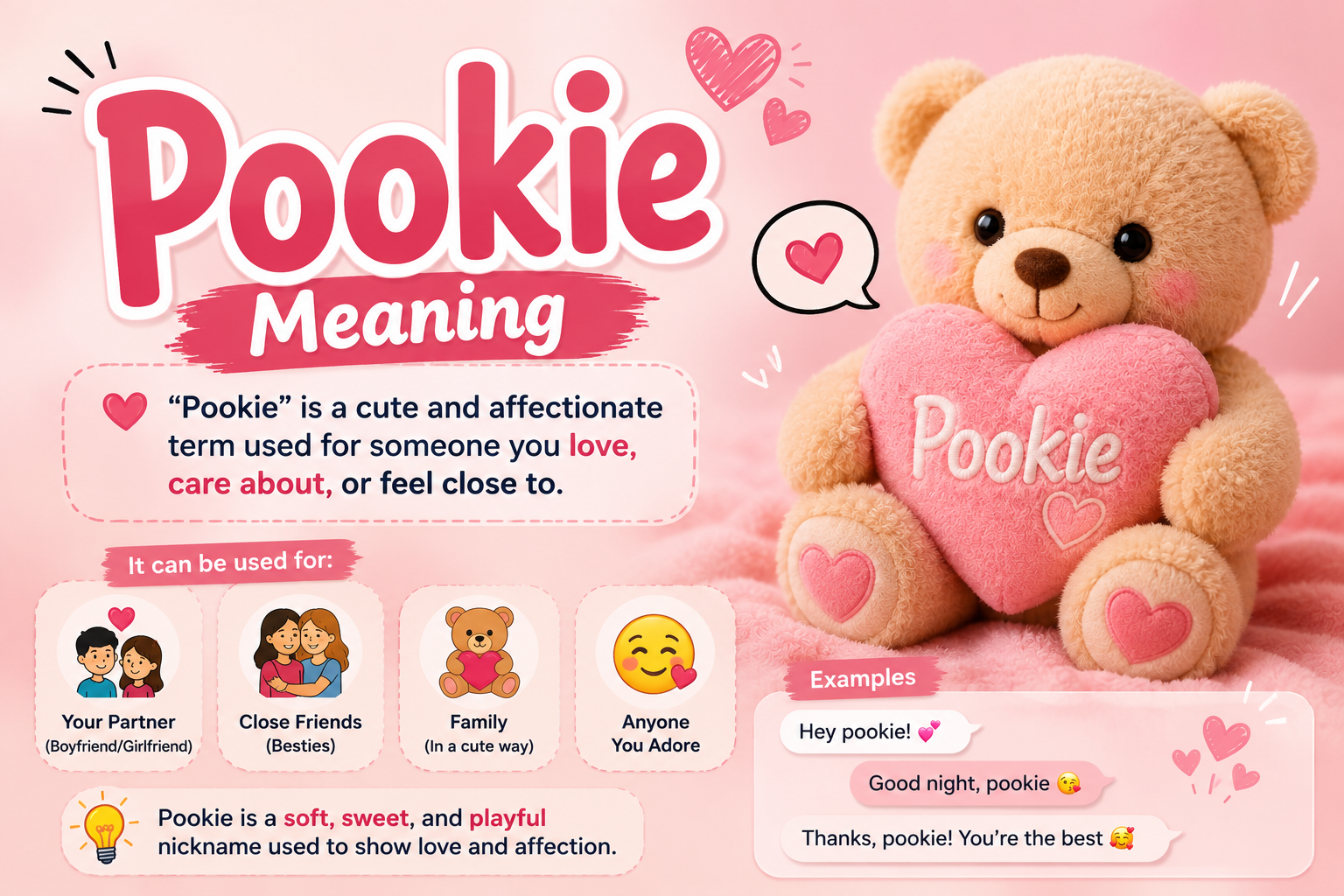
What Does Pookie Mean?
Someone called you pookie and now you’re wondering if that’s cute or concerning. Relax. In almost every case, pookie is a term of endearment, a soft nickname for someone you care about. Merriam-Webster defines it as a name for a partner, close friend, relative, or even a pet, used purely with affection.
It’s not one fixed word either. You’ll see it as Pookie, pooks, or Pookie Bear, and it shows up in texts, captions, and comment sections as a way of saying “you matter to me” without getting overly formal about it.
Where Did Pookie Come From?
Early Origins
The word has a longer history than most people expect. Merriam-Webster traces the first printed use of pookie as a general term of endearment to the mid-1960s. Before that, it worked mostly as a personal nickname rather than a word anyone could use.
There are competing theories about where it originated. One traces it to German family speech, where diminutive forms like “Pooki” carried a meaning close to “little one” and may have traveled into American English through mid-century immigration and pop culture. Another points further back, to Celtic folklore, where a mischievous creature called a púca gave its name to a similar-sounding word in an 1867 Scottish short story. Neither theory has solid written proof, so the honest answer is that no one knows for certain which one is right.
How It Moved Into Mainstream Slang
Pop culture did a lot of the heavy lifting here. Garfield’s teddy bear was named Pookie, and that alone kept the word floating around English-speaking households for decades. Urban Dictionary picked it up in the early 2000s, but the real modern spike came later, when a well-known TikTok couple started using the term constantly in their videos. Fans copied the trend, and pookie turned into a viral tag almost overnight.
How People Use Pookie Today
As a Romantic Nickname
This is the most common use by far. Couples use pookie the same way they’d use babe, honey, or love. It’s soft, a little playful, and doesn’t carry much weight beyond “I adore you.”
For Friends, Family, and Pets
Pookie isn’t reserved for romance. Parents call kids pookie, friends call each other pookie, and plenty of people call their dog or cat pookie without a second thought. The word just signals closeness, whoever it’s aimed at.
As Playful Teasing
Tone changes everything with this word. Drag it out with a smirk, “Poooookie,” and it can gently mock someone for being dramatic or overly clingy. It still comes from a place of affection, closer to a friendly eye-roll than an insult.
Is Pookie Always a Compliment?
The Slang Meaning You Should Know
Here’s the twist most guides skip. In certain communities during the 1980s and 1990s, pookie picked up a much darker secondary meaning, referring to a crack pipe or, by extension, someone addicted to crack cocaine. This usage isn’t mainstream and won’t come up in a normal conversation, but it does exist in older slang dictionaries and regional speech, so it’s worth knowing the word isn’t universally sweet in every context.
Context Decides the Tone
If someone calls you pookie in a text with a heart emoji, that’s affection, plain and simple. If you hear it used in an unfamiliar setting or from someone you don’t know well, pay attention to the surrounding conversation before assuming it’s a compliment. Slang rarely means just one thing, and pookie is a good example of how far a single word can stretch.
How to Use Pookie in a Sentence
A few natural ways the word actually gets used:
- “Hey pookie, I’m heading home soon, want anything?”
- “Our new kitten is such a little pookie.”
- “You’re being so dramatic right now, pookie.”
When Not to Use It
Save it for people you’re genuinely close with. Using pookie with a coworker, a stranger, or in a professional setting will land as odd at best and inappropriate at worst. It’s built for casual, affectionate relationships, not formal ones.
Pookie vs. Similar Nicknames
Pookie sits in the same family as babe, honey, boo, and cuddle bug. What sets it apart is the slightly goofy, childlike sound of the word itself. It doesn’t try to sound sleek or romantic in a traditional sense. That’s actually part of the appeal. It feels playful rather than polished, which is why it works so well for teasing as much as for genuine affection.
Frequently Asked Questions
Who started calling people pookie? No single person invented it. The word likely developed through German-influenced family speech and older folklore terms, then spread through American pop culture, most notably through Garfield’s teddy bear, before TikTok gave it a fresh viral push in recent years.
Is pookie a romantic word only? No. It’s most common in romantic relationships, but it’s just as often used for close friends, family members, and pets. The meaning depends entirely on who’s saying it.
Does pookie have a negative meaning? In rare, older slang contexts, yes. It has been used to refer to a crack pipe or someone struggling with addiction. This meaning is uncommon today and won’t apply in most everyday conversations.
What is Pookie Bear? A slightly more exaggerated version of pookie, often used the same way, as an affectionate nickname for a partner or loved one. It gained extra popularity through TikTok trends and viral couple content.
Final Thoughts on Pookie
Pookie has stayed in rotation for decades because it does one job really well: it signals closeness without sounding stiff. Whether it’s aimed at a partner, a best friend, or a pet curled up on the couch, the word carries warmth first. Just remember that tone and context still decide how it lands, so read the room before you drop it into a new conversation.
