


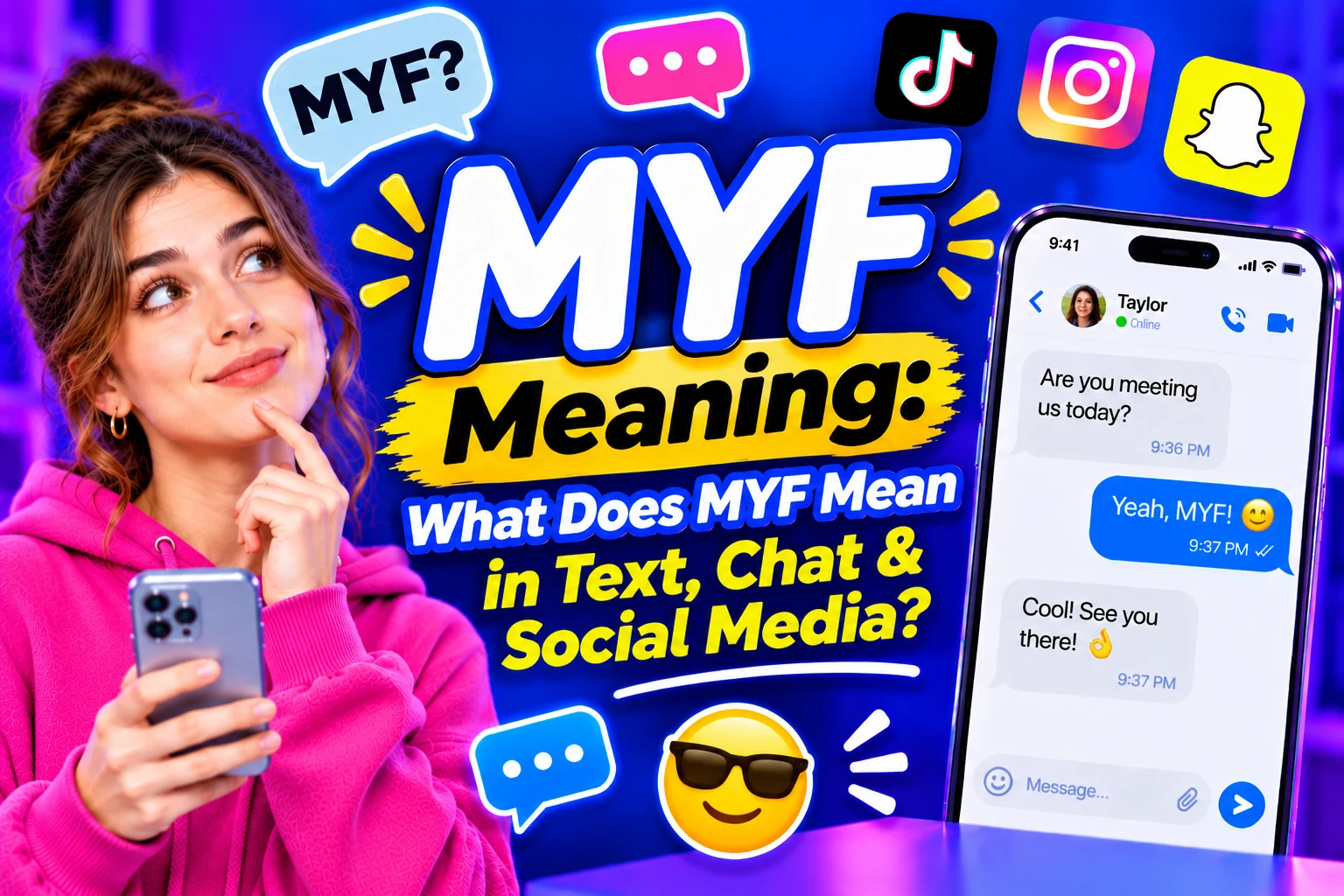
MYF can mean “miss your face” in a text. It’s a playful way to say you miss seeing someone. If your cousin sends “MYF. Sunday lunch feels quiet without you,” they’re saying they miss having you around.
The same letters can also mean “my fault” or, in some chats, “my friend.” I’d read the rest of the message before choosing a meaning. “I sent the old address” gives you a different clue from “When are you back in town?”
MYF Meaning in Text at a Glance
| Possible meaning | When it fits | Example |
|---|---|---|
| Miss your face | Someone misses seeing you or spending time with you. | “MYF. Our walks were the best part of my week.” |
| My fault | Someone admits they made a mistake. | “Myf, I left your name off the list.” |
| My friend | Someone uses it as a friendly way to address you. | “Safe travels, myf. Text me when you land.” |
The abbreviation is informal, and people can use it differently. A single message can be hard to read when it contains only three letters. The line before it often helps more than the way it’s typed.
When Someone Means “Miss Your Face”
“Miss your face” means “I miss seeing you.” People can use it after a friend moves away, a sibling leaves for college, or a partner goes on a trip. The wording feels playful, especially when it comes with a detail about something you used to do together.
Say your old roommate sends a photo of the tiny kitchen where you used to make pancakes. The message says, “MYF. I still make way too much batter.” They miss the time you spent together. The photo and the memory make the meaning clear.
A close friend might send it after a week apart. A cousin might write it under a family photo. What matters is the connection between the people and what they were talking about. If the message already sounds flirty, the phrase can add to that tone. From an old friend, it can be as simple as saying they miss your company.
When It Means “My Fault”
Read it as “my fault” when the sender is taking responsibility for a mistake. Look for words like “forgot,” “clicked,” or “sent.” Those words tell you what went wrong and often make the short reply easy to understand.
Nora — “The link opens last month’s schedule.”
Rafi — “Myf, I copied it from the wrong folder. Sending the new one now.”
Rafi is saying the mistake was his. “My bad” would work in the same exchange because it’s an informal way to accept blame. For a client or teacher, a full sentence such as “Sorry, I sent the wrong link. Here’s the correct one” makes the apology and the fix clear.
When “My Friend” Makes Sense
“My friend” is another possible reading, especially when the letters appear where someone might put your name. In “Good to see you, myf,” the short form comes at the end of a greeting. Reading it as “my friend” makes the sentence flow naturally.
This use may be easier to spot if the sender already calls you “my friend” in regular conversation. If they write “Morning, myf. You still up for breakfast?” the greeting gives you a clue. If they send just “MYF” after months apart, “miss your face” may fit better.
How to Tell Which Meaning Fits
I’d look at what happened just before the message. If you told someone they brought the wrong keys, the reply probably has something to do with that mistake. If you sent an old photo of the two of you, it’s more likely a reaction to the memory.
A quick way to check is to read the line with the words spelled out. “My fault, I mixed up the room numbers” makes sense on its own. “Miss your face, I mixed up the room numbers” would need more of a story to connect those thoughts. This check is especially handy in a busy group chat where people switch topics fast.
Capital letters and emojis can add tone, but the sentence carries more of the meaning. A heart can make a message feel warm. A laughing emoji can make an apology feel lighter. If the chat gives you too little to go on, “What does that mean here?” is a simple reply.
What It Can Mean on Snapchat, Instagram, and TikTok
Snapchat
A friend might reply to a snap from your new campus with “MYF. Who am I supposed to get fries with now?” They’re saying they miss you, and the mention of fries gives the message a personal touch. If the reply follows “You sent that snap to the wrong group,” the apology meaning fits better.
Say you post a photo from an old dance class and someone from the group comments, “MYF. We need a reunion.” The reunion gives you a clear hint. You can reply to the comment with “We really do!” or message them privately if you want to make a plan.
TikTok
Comments and replies can lose their meaning when you read them alone. A reply like “myf, I thought this was part one” is easy to understand when you read it with the comment above it. The person is owning a mix-up about the video, so “my fault” makes sense there.
How to Reply Naturally
Reply to what the person is saying. If they miss seeing you, a warm reply works. If they’re fixing a small mistake, a quick “All good” may be enough. And if you’re unsure, you can ask without making it awkward.
| What they send | A reply you can use |
|---|---|
| “MYF. Haven’t seen you since the book fair.” | “I miss you too. Want to grab coffee next week?” |
| “Myf, I thought we were meeting at the library.” | “All good. We’re at the café across the street.” |
| “Enjoy the break, myf.” | “You too! Hope you get some time to rest.” |
| “MYF” with no other clue | “Do you mean ‘miss your face’?” |
If someone misses you and you’d like to keep the reply friendly, “It’s been a while! Hope you’re doing well” works too. You can answer warmly in words that feel right for your relationship.
FAQs
Q: Is MYF romantic?
It can sound flirty, but friends and family can use “miss your face” too.
Q: Can I write it in lowercase?
Yes. Both myf and MYF can appear in casual messages.
Q: Is it okay to use in a work message?
Spell out what you mean in a work message, especially if you’re explaining a mistake.
Q:What’s a clear way to say “miss your face”?
“I miss seeing you” keeps the message warm and clear.
Final Thoughts
When you see MYF, read it with the line before it. A message about catching up points toward “miss your face.” A message about a mix-up points toward “my fault.” If it comes at the end of a greeting, try reading it as “my friend” and see whether the sentence makes sense.
