


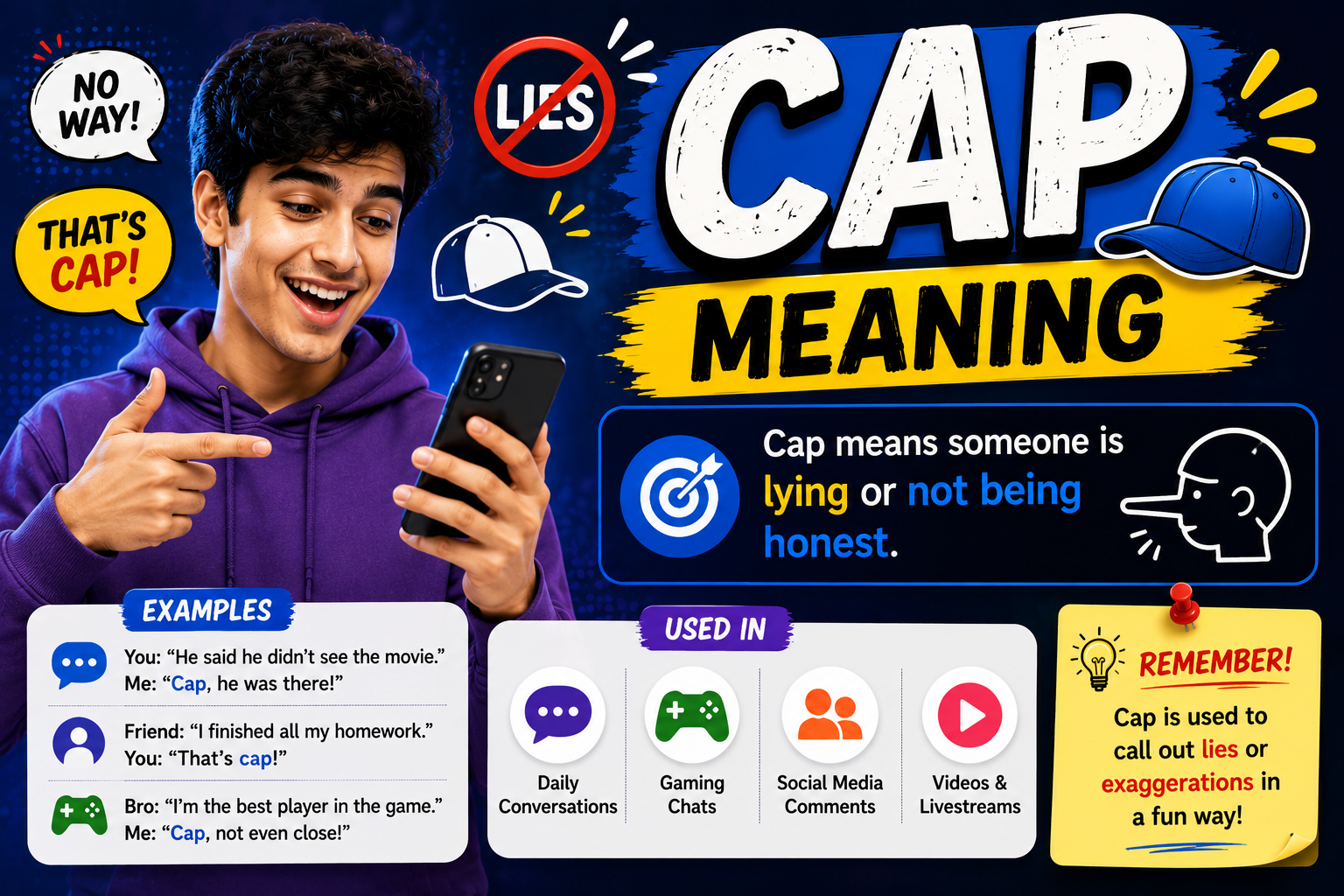
If you’ve spent time on TikTok, Snapchat, Instagram, or X (formerly Twitter), you’ve probably seen someone comment “Cap,” “No cap,” or “That’s cap.” These short phrases have become some of the most popular Gen Z slang terms, but they can be confusing if you’re seeing them for the first time.
In internet slang, cap has nothing to do with hats. Instead, it’s used to call out a lie, exaggeration, or something that isn’t true. If someone says “That’s cap,” they’re saying they don’t believe what’s being said.
In this guide, you’ll learn the complete cap meaning, where it came from, how it’s used on social media, and how to use it correctly in conversations.
What Does Cap Mean?
In Gen Z slang, cap means a lie, false statement, or exaggeration. It’s commonly used when someone thinks another person isn’t telling the truth.
Quick Answer
Cap means “lie” or “false.” If someone says “That’s cap,” they mean they don’t believe what was just said.
The opposite phrase is “No cap,” which means “I’m being honest” or “I’m telling the truth.”
Cap Meaning in Gen Z Slang
Among Gen Z, cap is one of the most common ways to call out something that seems fake or exaggerated.
For example:
Friend: “I scored 100% without studying.”
You: “Cap.”
This simply means:
- I don’t believe you.
- That’s a lie.
- You’re exaggerating.
The slang is usually playful between friends but can also be used seriously.
Cap Meaning in Text
In text messages, cap is often used as a one-word reply.
Examples:
Friend: “I can run faster than everyone in school.”
You: “Cap.”
Friend: “I met my favorite celebrity today.”
You: “That’s cap.”
Friend: “This is the best pizza I’ve ever had.”
You: “No cap?”
Here, the reply asks whether the person is telling the truth.
Cap Meaning on TikTok
TikTok made cap and no cap even more popular through memes, reaction videos, and challenges.
Common comments include:
- “Big cap.”
- “That’s cap.”
- “No cap.”
- “Stop the cap.”
- “Cap detected.”
People use these phrases when reacting to unbelievable stories, bold claims, or funny videos.
Cap Meaning on Instagram and Snapchat
On Instagram and Snapchat, cap frequently appears in comments and private chats.
Examples:
- “You’re capping.”
- “That’s big cap.”
- “No cap, that looks amazing.”
- “Quit the cap.”
Friends often use these expressions jokingly while chatting.
Where Did Cap Slang Come From?
The slang meaning of cap comes from African American Vernacular English (AAVE). It became popular through hip-hop music before spreading across social media platforms like Twitter, TikTok, Instagram, and Snapchat.
Today, millions of people use cap and no cap in everyday online conversations.
Cap vs No Cap
Although they’re closely related, they have opposite meanings.
| Phrase | Meaning |
|---|---|
| Cap | A lie or false statement |
| No Cap | Honest, truthful, not exaggerating |
Examples:
“I finished the marathon in under two hours.”
“Cap.”
“This burger is the best I’ve ever had, no cap.”
This means the speaker genuinely believes what they’re saying.
Common Cap Phrases
You’ll often see these expressions online:
- Cap.
- That’s cap.
- Big cap.
- Stop the cap.
- You’re capping.
- No cap.
- Cap alert.
Each phrase relates to honesty or dishonesty.
Example Sentences
Here are some natural examples:
- “You’re definitely capping.”
- “That’s the biggest cap I’ve heard today.”
- “No cap, this movie was incredible.”
- “Stop the cap and tell the truth.”
- “He said he owns five sports cars. Cap.”
Frequently Asked Questions
What does cap mean in slang?
In slang, cap means a lie, exaggeration, or something that isn’t true.
What does cap mean in text?
It means the sender believes someone is lying or exaggerating.
What does no cap mean?
No cap means I’m telling the truth or I’m being completely honest.
What does “you’re capping” mean?
It means you’re lying or you’re exaggerating.
Is cap an insult?
Not necessarily. Friends often use it jokingly, but it can sound rude if used in a serious disagreement.
Final Thoughts
The modern cap meaning has become one of the most recognizable pieces of Gen Z slang. Instead of referring to a hat, it simply means a lie or exaggeration. Whether you’re texting friends, watching TikTok videos, or scrolling through Instagram comments, you’ll frequently see phrases like “That’s cap,” “Big cap,” and “No cap.”
Now that you know what cap means, you’ll have no trouble understanding one of the internet’s most popular slang expressions.
