


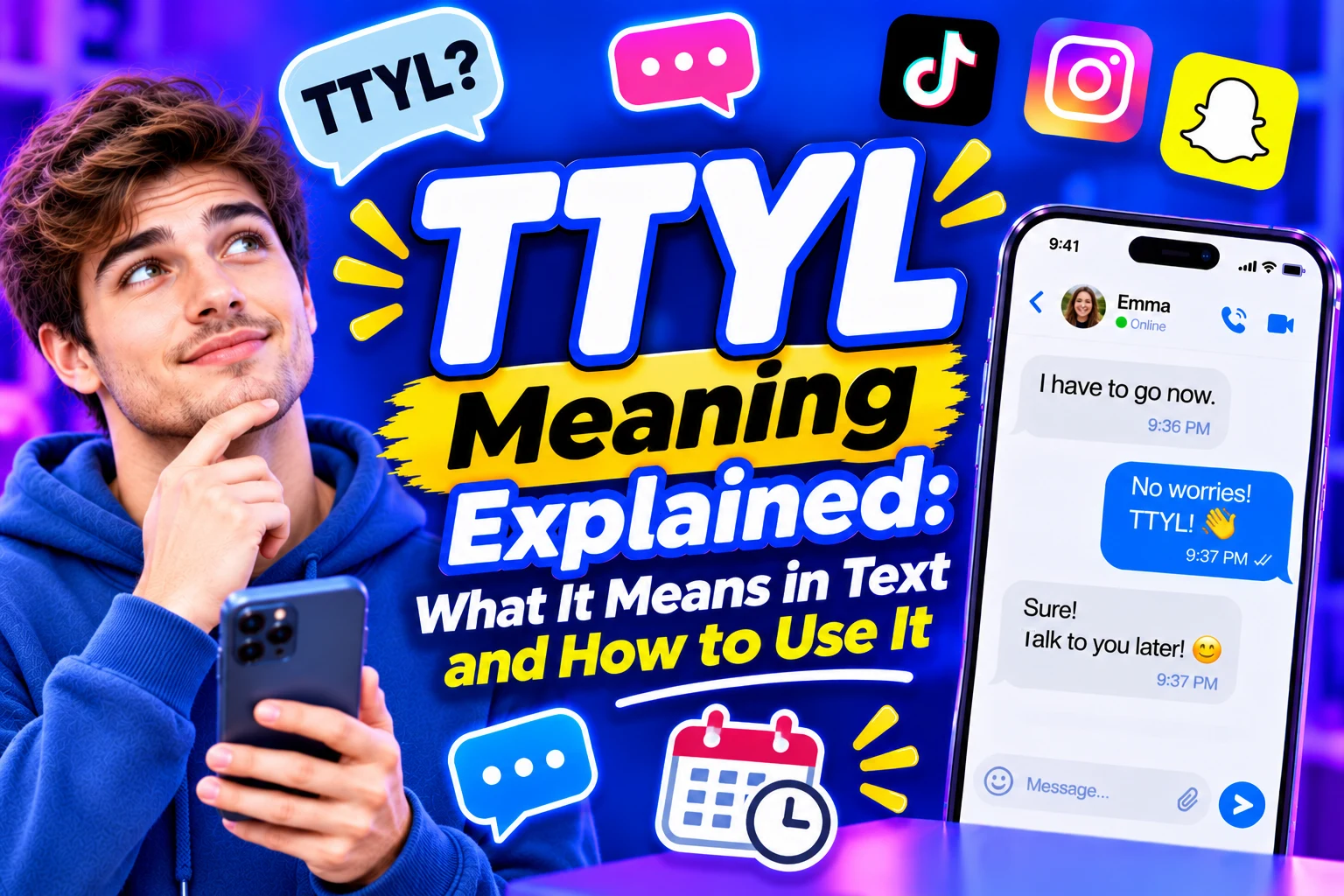
TTYL means “talk to you later.” It’s a quick way to say goodbye when you’re leaving a chat. If someone texts, “My ride’s outside. ttyl,” they’re saying they have to go and will catch up with you another time.
You’ll see it in messages between friends, family, and people who chat online. Sometimes it comes with a plan, like “I’ll call after practice.” Other times, it’s just a friendly way to end the exchange.
What Does TTYL Mean in Text?
In a text, TTYL means the person is signing off for now. It often comes after a reason for leaving or a quick thank-you.
Take this message: “Found the recipe you sent. Thanks! TTYL.” The person got what they needed and is wrapping up the chat. A simple “You’re welcome” would fit, and you could also leave the exchange there.
The letters stand for Talk To You Later. Both TTYL and ttyl work in informal writing. The meaning is the same in British and American English.
How Long Does “Later” Mean?
“Later” leaves the timing open. It could mean after an appointment, tomorrow, or whenever you next have something to share. If the sender gives a time, go by that part of the message.
| Text | What to expect |
|---|---|
| “TTYL. I’ll call when the match ends.” | The sender plans to call after the match. |
| “I’m off to bed. ttyl” | The chat is ending for the night. |
| “Glad we got that sorted. TTYL!” | The topic is settled and the chat is over for now. |
| “TTYL. Are you free at seven?” | The sender is trying to arrange a time. |
If you’re waiting to hear where to meet or what to bring, ask while you still have the chance. “Can you send me the address before you go?” gets you the detail you need.
How to Use TTYL Without Sounding Abrupt
Put TTYL where you’d usually say goodbye. It can stand on its own after a casual exchange. When you leave in the middle of a topic, a few extra words can make the sign-off feel more natural.
For example, “The plumber just arrived. TTYL!” explains why you’re going. “I want to hear how the interview went. I’ll text after class” gives the other person a reason to expect a follow-up.
Think about what the other person still needs from you. If they asked whether you’ll bring the keys, answer that first. “I’ve got the keys. TTYL!” closes the conversation and settles the plan.
TTYL Examples in Everyday Messages
When You Have to Leave Suddenly
Zara: “Did you get a chance to look at those sofa photos?”
Ali: “Only the first two. My appointment just started. TTYL!”
Ali gives a quick update before leaving. Zara knows why he stopped and can send the rest of her thoughts later.
After Helping a Friend
Noor: “Moving the desk closer to the window worked.”
Ivy: “Nice! Send me a photo when you’ve set it up. TTYL.”
Ivy ends the chat with something to pick up next time. Noor can send the photo when it’s ready.
When You’re Done Playing for the Night
Jay: “We’re starting another round in five.”
Dev: “I’m done for tonight. TTYL, everyone.”
Dev is saying goodbye to the group. “I’m done for tonight” also tells the others they can start the next round without waiting.
What Does TTYL Mean on Snapchat or Instagram?
On Snapchat or Instagram, TTYL still means “talk to you later.” You might see it at the end of a private chat, after a few photo replies, or when someone says they’re going offline.
Pay attention to who the message is addressed to. In a private chat, the person is saying goodbye to you. In a group, “TTYL, everyone” signs off from the whole conversation. The audience changes, while the phrase keeps its usual meaning.
Is TTYL Friendly, Rude, or Flirty?
TTYL usually reads as a casual goodbye. “I had fun talking to you. TTYL!” feels warm because the sender says they enjoyed the chat. A standalone “ttyl” can feel abrupt if it comes right after a personal question.
The same abbreviation can appear in a flirty conversation. If someone writes, “I wish we’d had more time together tonight. TTYL,” the first sentence carries the affection. Read the message as a whole before drawing a conclusion from the sign-off.
If you need to leave during a serious conversation, spell out your next step. “I have to get back to work, but I want to finish talking about this tonight” gives the other person something clear to expect.
TTYL vs. BRB, GTG, and BBL
These short forms help you say what’s happening when you step away. BRB means “be right back” and signals a short break. TTYL usually closes the conversation for the time being.
| Short form | Full phrase | When it fits |
|---|---|---|
| TTYL | Talk to you later | You’re ending the chat for now. |
| BRB | Be right back | You expect to return shortly. |
| GTG | Got to go | You need to leave now. |
| BBL | Be back later | You expect to return after a while. |
If you’re stepping away to turn off the oven, “BRB” tells the other person they can expect you back shortly. If you’re heading out to run errands, “TTYL” lets the chat end there. You can also write “GTG, ttyl!” when you need to leave quickly.
How to Reply When Someone Says TTYL
Match your reply to the reason they’re leaving. If a friend texts, “My dentist called me in. TTYL,” you could write “Good luck!” If they’re heading to bed, “Night! Speak tomorrow” feels natural.
Here are a few replies you can adapt:
- When the chat is finished: “Catch you later!”
- When they’re going somewhere: “Have fun at the fair!”
- When they’ve offered to follow up: “Sounds good. I’ll keep an eye out.”
- When you still need a detail: “Quick one before you go. Which entrance should I use?”
You can also reply with “TTYL!” yourself. It works much like saying goodbye back to someone who’s already said it.
Can You Use TTYL at Work?
TTYL can fit an informal chat with a coworker you know well. For a client message or a task someone is waiting on, give the reader a concrete next step.
“I’m stepping into a meeting. I’ll send the updated schedule by three” helps the reader plan their day. If the work is already finished, “Thanks for checking the dates” is a simple way to close the exchange.
Frequently Asked Questions
Q: Does TTYL mean the person will call or text?
It can refer to either. Look for a detail like “I’ll ring you after dinner” if the method matters.
Q: Is “ttyl” different from “TTYL”?
No. They have the same meaning. Lowercase is a normal choice in casual messages.
Q: Do I have to wait for them to message first?
You can reach out when you have something to share or need to follow up. The phrase leaves it open who starts the next chat.
Q: Can I say “talk to you later” out loud?
Yes. The full phrase works as a casual spoken goodbye. TTYL is its written shorthand.
