


What Does BBW Stand For?
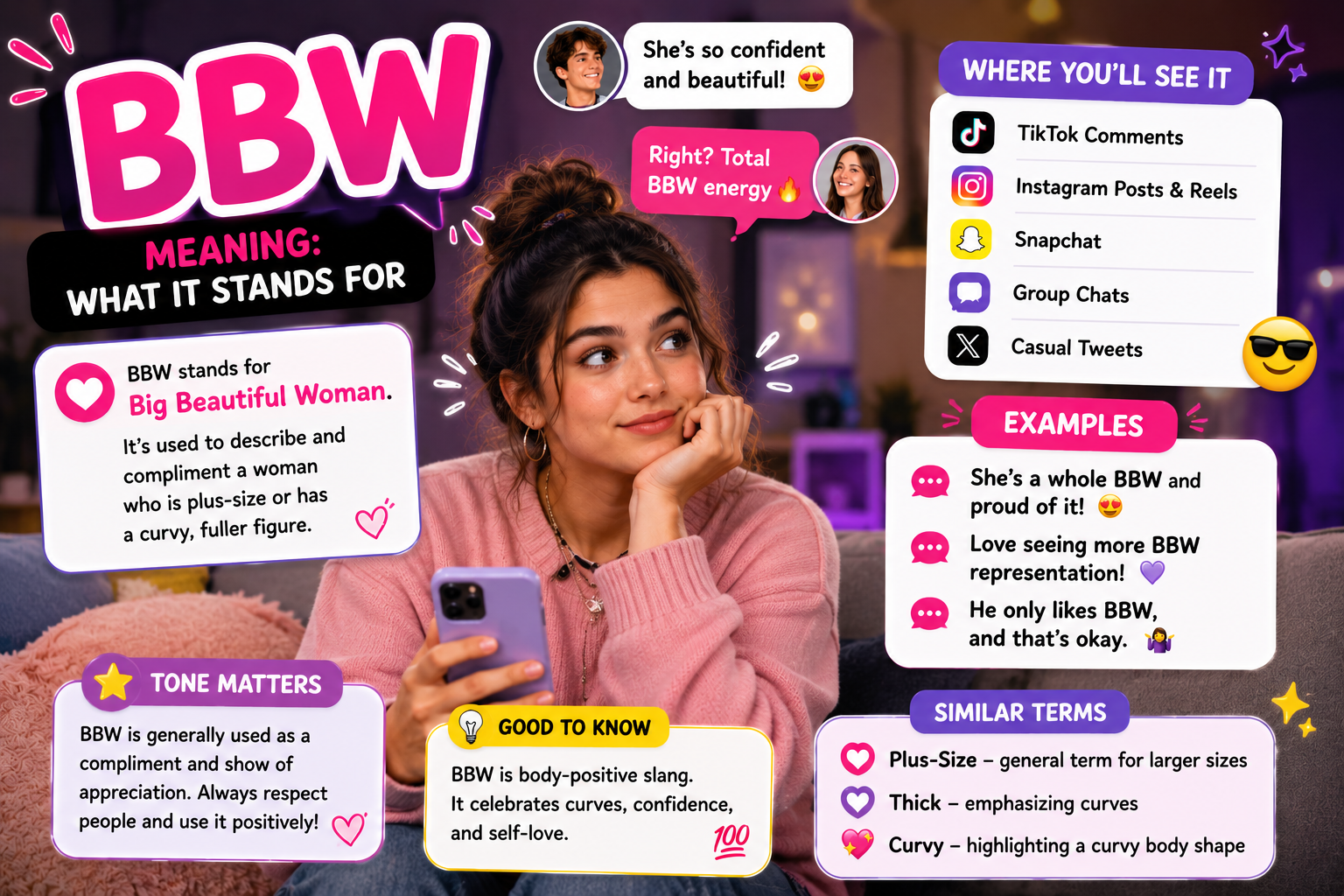
BBW stands for “Big Beautiful Woman.” It’s a term used to describe plus-size or fuller-figured women, and it was created specifically as a positive, affirming label rather than a euphemism for anything negative. The “beautiful” isn’t an afterthought. It’s the whole point of the phrase.
You’ll run into it most in body-positive spaces, fashion and lifestyle content, and dating profiles, where it works as both a description and, for many women, a term of self-identification.
Where Did BBW Come From?
Origin in 1979
The term has a clear, documented origin. Carole Shaw coined “Big Beautiful Woman” and its acronym in 1979 when she launched BBW Magazine, a fashion and lifestyle publication built specifically to represent plus-size women at a time when mainstream fashion media largely ignored them. The magazine trademarked the phrase, which was later passed on to Dimensions Magazine.
Growth Alongside Body Positivity
From there, BBW grew alongside the broader body acceptance and fat acceptance movements, becoming one of several terms, alongside words like “curvy,” “full-figured,” and “voluptuous,” used to describe larger bodies in affirming rather than dismissive language.
How Is BBW Used Today?
As Self-Identification
Many women who fit the description use BBW themselves, choosing it as a way of describing their own body with confidence rather than having a less flattering label applied to them by someone else. It’s often treated as a personal identity term rather than a strict measurement.
In Fashion and Body Positivity Spaces
BBW shows up regularly in plus-size fashion content, body-positive social media, and inclusive marketing, usually alongside a message about embracing diverse body types rather than conforming to narrower beauty standards.
In Dating and Relationships
On dating apps and sites, BBW frequently appears as a descriptor or preference tag, helping people connect around a shared attraction or identity. Some platforms and communities are built specifically around this space.
BBW vs. Similar Terms
BBW overlaps with a few related terms, though each carries a slightly different emphasis. Plus-size is primarily a clothing-industry term, referring to sizing (generally 14 and up) rather than identity. Curvy describes body shape more broadly and doesn’t always imply a plus-size body. SSBBW (Super-Sized Big Beautiful Woman) refers to a larger subset within the same general idea, typically used for significantly larger body sizes. BBW sits closer to plus-size than curvy, but it carries more personal, identity-based weight than either.
Is BBW an Offensive Term?
This depends heavily on context, and it’s a genuinely mixed picture. The term was created to be positive, and plenty of women embrace it proudly as an affirming description of their own body. At the same time, some people find it reductive if used to define a woman primarily by her size, and in certain corners of the internet, particularly around adult content and dating platforms geared toward casual encounters, the term has picked up a more objectifying or fetishized connotation that moves away from its original body-positive intent.
Because of that range, the safest approach is simple: use it the way the person themselves uses it, and don’t assume every plus-size woman wants the label applied to her. If someone identifies as BBW, respecting that is straightforward. If they don’t use the term for themselves, it’s better to avoid assigning it to them.
How to Use BBW in a Sentence
A few respectful, everyday examples:
- “She runs a plus-size fashion account and describes herself as a proud BBW.”
- “The dating app lets you filter by body type, including BBW, if that’s your preference.”
- “BBW Magazine was one of the first publications to feature plus-size models.”
Frequently Asked Questions
Who coined the term BBW? Carole Shaw, who launched BBW Magazine in 1979 as a fashion and lifestyle publication for plus-size women.
Is BBW the same as plus-size? Not exactly. Plus-size is a clothing category based on sizing, while BBW is more personal and identity-based, often chosen by women themselves rather than describing a specific size range.
Is it okay to call someone BBW? Only if they use the term for themselves. It was created as a positive label, but not everyone who might technically fit the description wants it applied to them.
Does BBW always have a body-positive meaning? Mostly, yes, especially in fashion and self-identification contexts. In some adult content and casual dating spaces, though, the term has taken on a more objectifying use that moves away from its original intent.
Final Thoughts on BBW
BBW started as a deliberate act of representation, giving plus-size women a term that celebrated rather than minimized their bodies. Decades later, it’s still used that way by plenty of people, even as its meaning has picked up some additional baggage in certain corners of the internet. The most respectful approach is simple: let people describe themselves however they choose, and follow their lead.
