


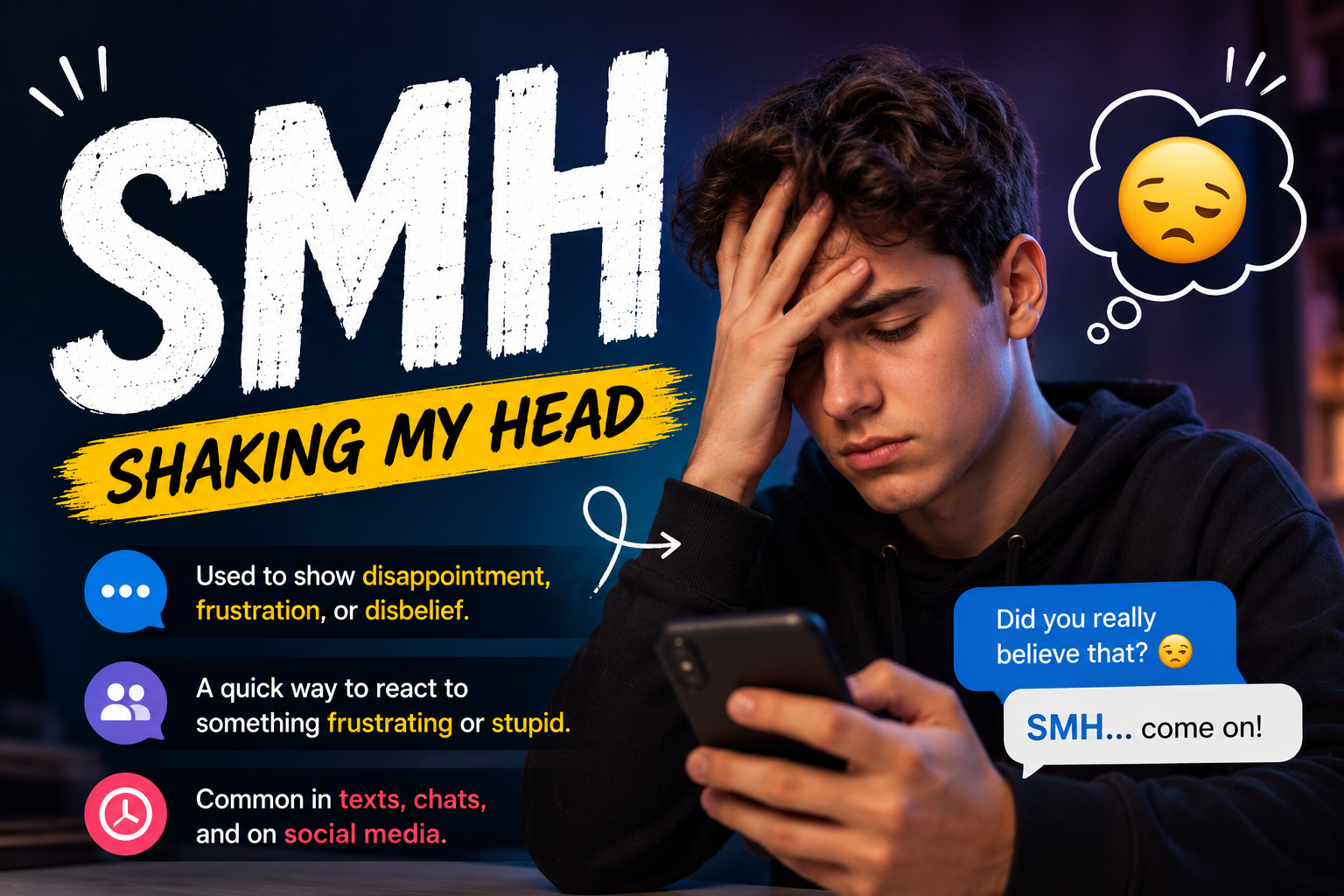
What Does SMH Mean?
You’ve scrolled past it a hundred times without thinking twice. SMH stands for “shaking my head.” It’s a text-based stand-in for the actual head shake you’d give someone in person when you don’t believe what you’re hearing, or you just can’t with a situation anymore.
Merriam-Webster describes it as a gesture in shorthand form, the same way LOL stands in for an actual laugh. You’re not stating an opinion so much as performing a reaction. Say it out loud and it still works, most people just read the letters as “smh” rather than spelling out the full phrase.
Where Did SMH Come From?
Early Origins
SMH is older than most internet slang gets credit for. Merriam-Webster has documented it in Usenet newsgroups as far back as 1994, well before texting or social media existed in their modern form. Early posts used it exactly the way people do now, as a quick marker of exasperation or disbelief tucked into a longer message.
How It Moved Into Mainstream Slang
The abbreviation picked up real momentum once Twitter and early message boards took off in the mid to late 2000s. Dictionary.com notes it was first entered on Urban Dictionary in 2004 and spread widely on Twitter by 2007, with usage especially prevalent within Black internet communities early on. By the 2010s, outlets like Vice and Bustle were writing full explainers on it, a clear sign it had crossed from insider slang into something the general public needed decoded for them.
How People Use SMH Today
On Social Media
You’ll see SMH tacked onto the end of a post reacting to bad news, an embarrassing mistake, or just something absurd. It works as a lighter version of a full rant, letting someone signal disapproval without writing paragraphs about it.
In Everyday Texting
In one-on-one conversations, SMH usually reacts to something a friend just told you. Someone admits they forgot their keys again, or did something clumsy, and “smh” says everything that needs saying without extra typing.
As a Stronger Variant
When plain disappointment isn’t enough, people escalate. SMDH stands for “shaking my damn head,” and SMFH pushes it further with a harsher word swapped in. Both intensify the same core feeling rather than changing its meaning.
Does SMH Always Mean the Same Thing?
The Common Meaning
Shaking my head is by far the dominant reading, and it’s the one you should assume unless context clearly says otherwise. It covers everything from mild amusement at someone’s bad luck to genuine frustration at a situation that shouldn’t be happening.
Less Common Alternate Meanings
A few other readings float around, though they’re far rarer. Some people use SMH to mean “so much hate” when reacting to cruelty online, or “scratching my head” when they’re genuinely confused rather than disappointed. There’s also an occasional, more mature use as “sex might help,” which shows up rarely enough that most readers will never encounter it, but it’s worth knowing it exists if the surrounding conversation seems off. In almost every real-world case though, shaking my head is exactly what’s meant.
How to Use SMH in a Sentence
A few natural examples of how it actually shows up in conversation:
- “He forgot the tickets again. SMH.”
- “They canceled the show last minute, smh, such a letdown.”
- “I walked out without paying and didn’t notice for a block. SMH.”
When Not to Use It
Keep it out of formal writing, professional emails, or anything you’d want to sound polished. SMH reads as casual and a little blunt, which is exactly why it works in texts and social posts but falls flat in a report or a message to your boss.
SMH vs. Similar Reactions
SMH sits next to other short reaction terms like “bruh,” “sigh,” or “FFS.” What sets it apart is the physical gesture baked into the letters themselves. Where “sigh” evokes a sound, SMH evokes a visible motion, which is part of why it reads as slightly more expressive despite being just three letters.
Frequently Asked Questions
Who started using SMH? No single person gets credit for it. Documented use goes back to early 1990s internet newsgroups, and it later spread through Black Twitter and broader online communities in the mid to late 2000s before becoming mainstream slang.
What does SMDH mean compared to SMH? SMDH stands for “shaking my damn head,” a more intense version of the same reaction. It’s used when plain disappointment doesn’t quite capture the feeling.
Can SMH mean something other than shaking my head? Occasionally. It can rarely stand for “so much hate” or “scratching my head” depending on context, though shaking my head remains the meaning you should default to almost every time.
Is SMH rude? Not inherently. It’s blunt and casual, which can come across as dismissive in certain settings, but among friends it usually just signals mild frustration or disbelief rather than genuine hostility.
Final Thoughts on SMH
SMH has lasted this long because it captures something a full sentence often can’t: that quick, wordless head shake you’d give someone in person. Whether you’re reacting to a friend’s bad decision or a piece of frustrating news, those three letters do the job fast. Just keep it casual, and save the formal language for settings where slang doesn’t belong.
